


Views: 0 Author: Site Editor Publish Time: 2025-12-18 Origin: Site


Safe VOC Concentrations in Industrial Workshops: Monitoring and Treatment Planning
Industrial workshops that use paints, inks, adhesives, cleaning solvents, resins, fuels, or chemical intermediates can release volatile organic compounds into workplace air and exhaust systems. The practical question is often: what are the safe concentrations of VOCs?
There is no single concentration that can be treated as safe for every workshop. VOCs include chemicals with different toxicity, exposure limits, flammability, and environmental requirements. A reliable plan starts by identifying the compounds present, measuring exposure correctly, and matching the exhaust profile to suitable treatment equipment.
A total VOC reading can be useful for trend monitoring, leak detection, and process control, but it does not replace compound-specific exposure limits.
A workshop containing mainly acetone does not present the same exposure profile as one containing toluene, xylene, benzene, or chlorinated solvents. For this reason, safe concentrations of VOCs should be evaluated chemical by chemical.
Exposure duration also matters. An 8-hour time-weighted average may be appropriate for assessing full-shift exposure, while short-term measurements are more useful for identifying peaks during spraying, cleaning, mixing, filling, or maintenance.
The key principle is simple: do not use one TVOC number as a universal safety threshold.
Occupational exposure limits provide the first reference for worker protection. In the United States, OSHA and NIOSH limits are commonly used, while other countries apply their own standards.
The examples below show why one TVOC value cannot represent every solvent:
| VOC Example | Typical U.S. Reference | Why It Matters |
|---|---|---|
| Toluene | 200 ppm OSHA 8-hour TWA | Requires compound-specific evaluation |
| Xylene | 100 ppm OSHA 8-hour TWA | Short-term peaks may also matter |
| Acetone | 1000 ppm OSHA 8-hour TWA | A higher limit does not apply to other VOCs |
| MEK / 2-butanone | 200 ppm OSHA 8-hour TWA | Needs separate workplace assessment |
These figures are examples only. Local rules, mixtures, short-term limits, and company standards may change the control target.
Breathing-zone exposure and VOC concentration inside an exhaust duct are not the same measurement.
Worker exposure monitoring asks what concentration employees actually breathe during a task or shift. Exhaust monitoring asks what pollutant load must be captured and treated before discharge.
A spray booth may contain relatively high VOC concentrations inside the captured exhaust stream while local ventilation keeps worker exposure much lower. Conversely, a leak near a workstation can create a breathing-zone problem even when stack emissions appear stable.
A useful monitoring program should also define the purpose of each measurement before sampling begins. Personal exposure sampling, source characterization, continuous process monitoring, and outlet compliance testing are not interchangeable.
Each produces data for a different decision. When the objective is worker protection, the sampling strategy should reflect where employees actually work and how long they remain near the emission source. When the objective is equipment sizing, the engineering team needs representative exhaust flow and concentration data across the full operating cycle.
Defining the measurement objective in advance prevents a common planning error: collecting a large amount of VOC data that cannot be used directly for either occupational assessment or treatment design.
Monitoring should represent real production conditions rather than only one convenient measurement point.
Useful locations include the worker breathing zone, emission sources, workshop areas, local exhaust hoods, main ducts, and treatment-system inlet and outlet points.
Full-shift measurements help evaluate average exposure. Short-term measurements can reveal peaks during solvent mixing, coating, printing, cleaning, filling, drying, and maintenance.
Portable VOC instruments are useful for rapid screening and trend detection, but nonspecific TVOC readings should not replace compound-specific sampling when regulatory exposure must be demonstrated.
Monitoring should cover normal and high-load production because a single average can hide important concentration spikes.
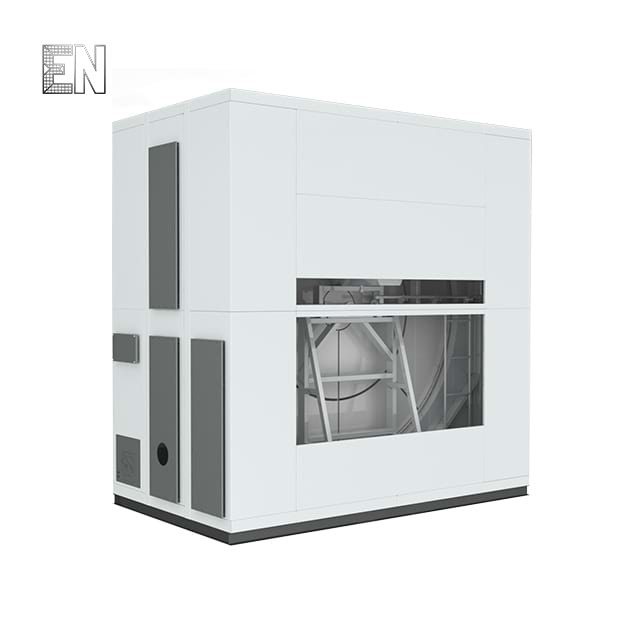
Image 1: Eco Nova VOC Concentrator for industrial organic waste-gas treatment
Monitoring should create a design basis for pollution-control equipment, not just a compliance report.
The engineering team needs to know:
airflow;
normal and peak VOC concentration;
solvent composition;
temperature;
humidity;
dust, oil mist, or paint-mist loading;
operating schedule;
concentration fluctuations;
required outlet standard.
Flammability also needs separate evaluation because an occupational exposure limit is not an explosion-safety limit.
Treating a large airflow of dilute VOC vapor is a different engineering problem from treating a smaller stream with a higher VOC load. This is where monitoring connects directly to equipment selection.
Eco Nova describes its VOC Concentratoras adsorption and concentration equipment for high-air-volume, low-concentration organic waste gas.
Its operating cycle includes adsorption, desorption, and cooling. VOCs are first captured by the rotor. A smaller heated air stream then desorbs the captured compounds and creates a more concentrated gas stream for downstream treatment. The adsorption medium is subsequently cooled and returned to service.
This can reduce the airflow sent to downstream oxidation instead of heating the entire dilute exhaust stream.
Eco Nova lists paint-spraying workshops, printing, synthetic resins, rubber products, semiconductors, aluminum profiles, and coating among potential application areas.
A concentrator should not be selected simply because VOCs are present. Airflow, inlet concentration, VOC composition, temperature, humidity, particulate loading, and downstream treatment requirements must all support the choice.
Once monitoring defines the exhaust stream, engineers can select appropriate Waste Gas Treatment Equipment.
Eco Nova's equipment portfolio includes VOC concentration systems, regenerative thermal oxidizers, regenerative catalytic oxidizers, catalytic oxidizers, and other industrial waste-gas treatment technologies.
The correct technology depends on the emission profile.
High-volume, low-concentration VOC exhaust may be suitable for concentration before oxidation. A smaller but more concentrated gas stream may be better suited to direct thermal or catalytic treatment.
Streams containing dust, mist, corrosive compounds, or unstable process conditions may require pretreatment or a different process arrangement.
Eco Nova's VOC Concentrator with RTO integrated system follows this logic: dilute VOC exhaust is concentrated first, then the smaller concentrated stream is sent to regenerative thermal oxidation, where VOCs are oxidized and heat is recovered through thermal-storage media.
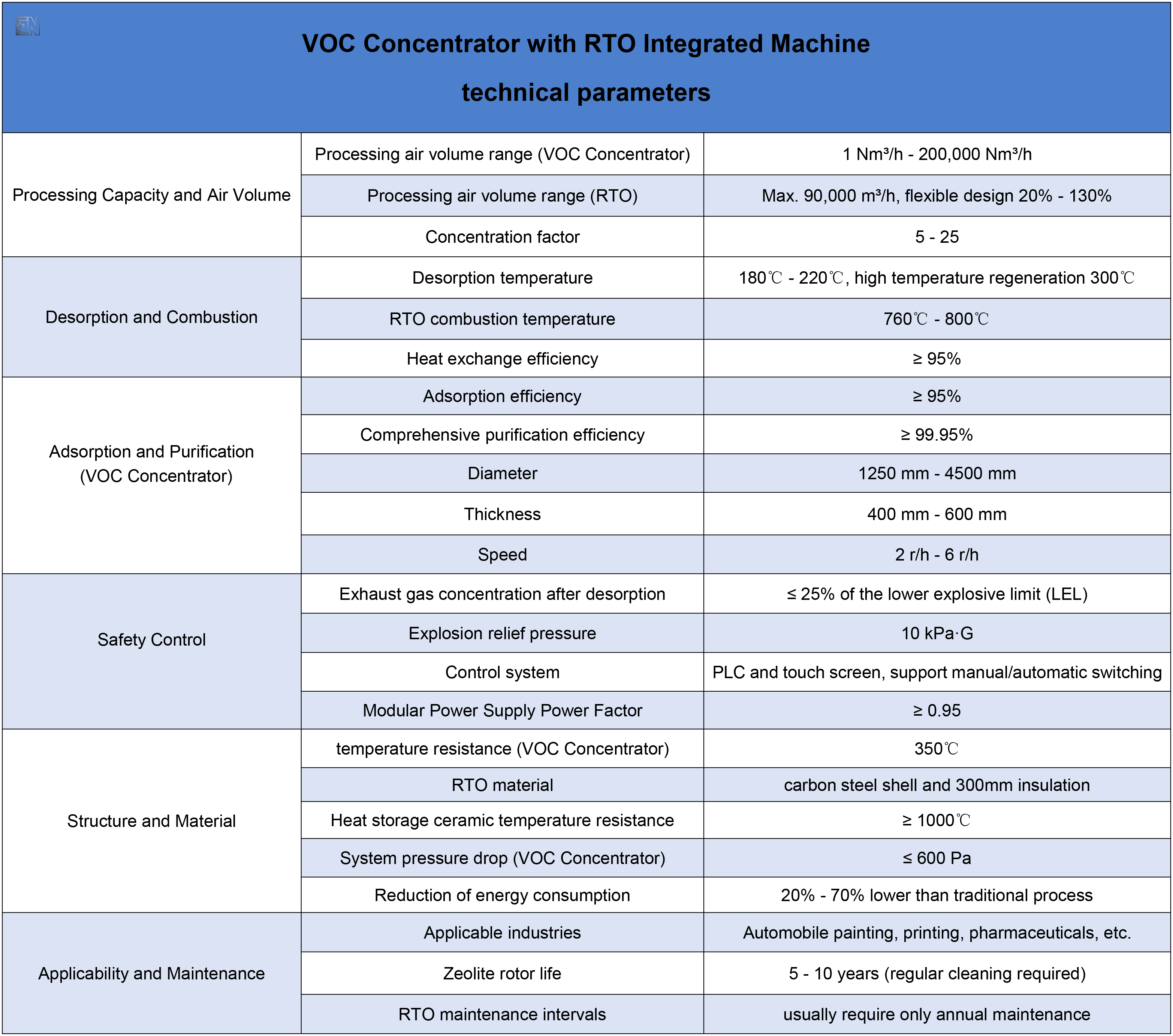
Image 2: Eco Nova VOC Concentrator with RTO treatment process
Treatment technology should be selected from measured exhaust characteristics, not from the workshop name alone. Two coating plants may need different systems if their airflow, solvents, or operating conditions differ.
Breathing-zone measurements can verify whether worker exposure remains controlled, while inlet and outlet measurements can be used to check treatment performance.
Process data such as fan operation, pressure differential, temperature, desorption conditions, and VOC trends can also help identify deterioration.
A rising VOC baseline may indicate increased solvent use, weaker ventilation, adsorption problems, or changes in production rate. Sudden peaks may reveal poorly captured tasks that would be hidden in a daily average.
Monitoring should be repeated after major process, production, ventilation, or treatment-system changes.
There is no single safe value for all VOCs. The acceptable concentration depends on the specific compound, exposure duration, applicable occupational limit, mixture effects, and local regulations.
No. TVOC is useful for screening and trends, but it does not confirm that every individual compound is below its occupational exposure limit.
Often both. Full-shift sampling evaluates average exposure, while short-term measurements help identify peaks during tasks such as spraying, cleaning, mixing, or filling.
A VOC Concentrator is commonly considered for high-volume, low-concentration organic exhaust where adsorption and concentration can reduce the airflow sent to downstream oxidation.
VOC concentration is only one input. Airflow, solvent composition, temperature, humidity, particulate loading, peak concentrations, operating schedule, flammability, and the required outlet standard also matter.
No. Occupational exposure limits protect workers, while environmental emission limits regulate discharged exhaust. They serve different purposes and should be evaluated separately.
Planning around safe concentrations of VOCs requires more than setting one TVOC alarm value.
Industrial workshops should identify the chemicals present, compare worker exposure with compound-specific limits, monitor both full-shift and peak conditions, and separately characterize the exhaust stream that must be treated.
Those measurements then become the engineering basis for selecting a VOC control system. High-volume, low-concentration exhaust may be suitable for a VOC Concentrator before oxidation, while other streams may require different Waste Gas Treatment Equipment depending on airflow, composition, temperature, and process variability.
Eco Nova focuses on industrial VOC waste-gas treatment, equipment manufacturing, and engineering delivery, with solutions that include VOC concentration systems, RTO, RCO, and other treatment technologies.
The practical sequence is straightforward: measure the right VOCs at the right locations, interpret the results against the correct health and emission criteria, and design the treatment system around actual airflow and pollutant characteristics.
That approach gives industrial workshops a stronger basis for worker protection, emission compliance, and stable long-term treatment performance.
That approach gives industrial workshops a stronger basis for worker protection, emission compliance, and stable long-term treatment performance when the monitoring results are converted into a preliminary equipment-selection matrix for the measured exhaust profile.


