Introduction
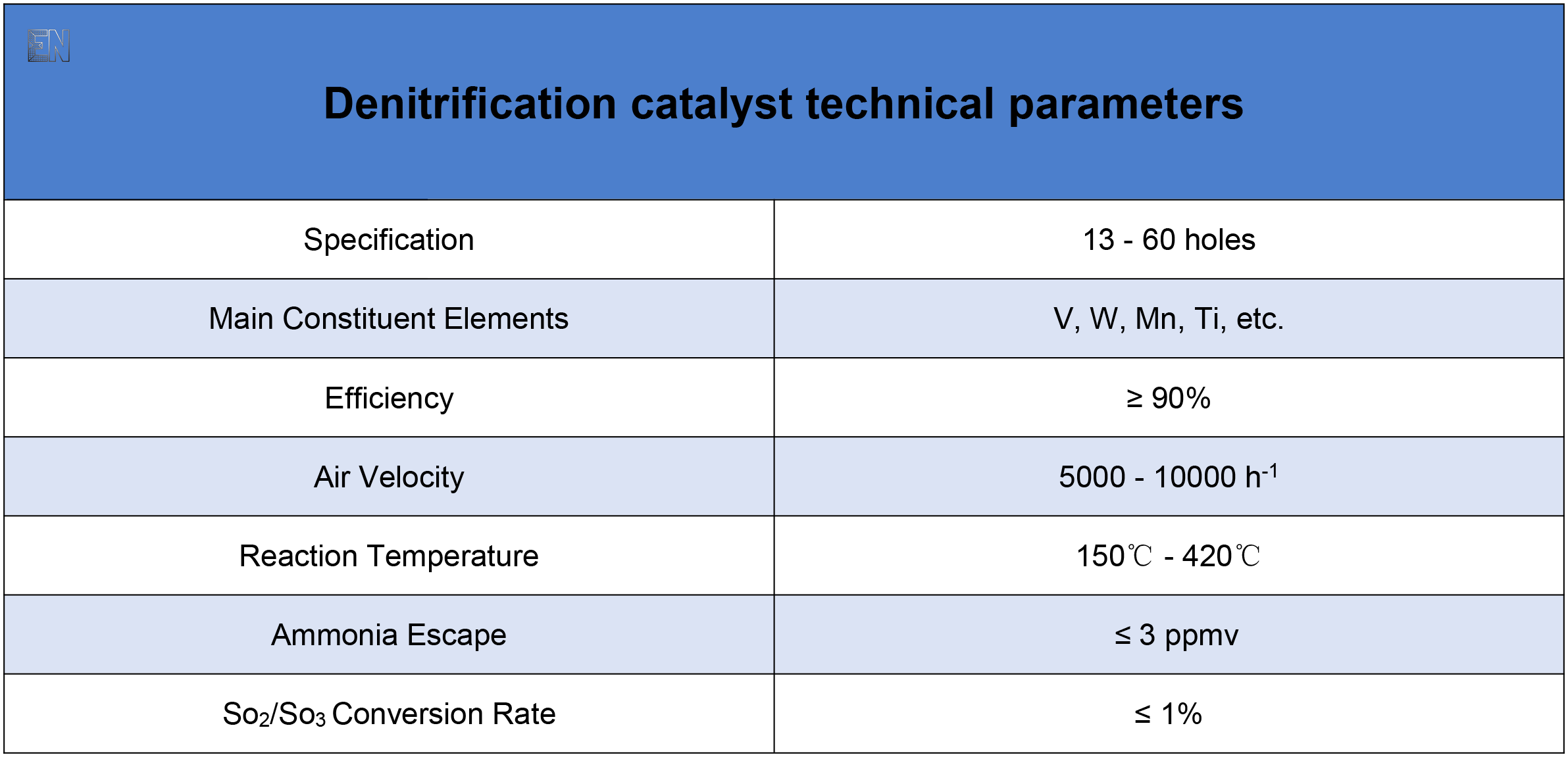
The Denitrification Catalyst is a high-performance environmental protection product designed to reduce NOx emissions from industrial flue gas, converting harmful nitrogen oxides into harmless N₂ and H₂O. It is widely recognized in industries requiring strict emission control for its mature technology and stable performance.
Characteristic Description
Mature & Stable Technology
With years of application verification, the catalyst has formed a mature and effective process system. It operates stably under various industrial conditions, ensuring consistent denitrification performance without frequent adjustments.
High Denitrification Efficiency & Low Ammonia Escape
The denitrification efficiency reaches ≥90%, fully meeting international environmental emission standards. Ammonia escape is controlled at ≤3 ppmv, minimizing ammonia consumption and avoiding secondary pollution.
Wide Temperature Adaptability
It adapts to a reaction temperature range of 150℃-550℃, covering low, medium, and high-temperature industrial processes. Different temperature ranges correspond to specific industrial scenarios, ensuring versatility.
Market Research
Global governments are strengthening regulations on NOx emissions, especially in power generation, cement, steel, and waste incineration industries. The market demand for high-efficiency denitrification catalysts is expected to grow by 25% in the next five years. Customers prioritize catalysts with high efficiency, low ammonia escape, and long service life – advantages that this product fully delivers.
Performance Meets
Denitrification efficiency ≥90%, complying with EU and global strict emission standards.
Ammonia escape ≤3 ppmv, reducing operating costs and avoiding equipment corrosion.
SO₂/SO₃ conversion rate ≤1%, protecting downstream equipment and ensuring flue gas treatment quality.
Application Fields
Low-temperature range (165℃-220℃): Packaging glass, coking (post-denitrification), garbage incineration, ceramic kilns, pharmaceuticals, power plant back-end denitrification.
Medium-low temperature range (225℃-275℃): Glass (before waste heat boiler), coking (pre-denitrification), sintering machine (low-temperature denitrification).
Medium temperature range (280℃-420℃): Power plants, heating boilers, flat glass, sintering machine (medium-temperature denitrification).
High-temperature range (420℃-550℃): Gas units, kiln combustion processes.
FAQ
What should I do if the catalyst module cannot be aligned during installation?
First, check if the support beam is deformed. Slight deformation can be corrected to restore flatness; severe deformation requires replacing the support beam. Additionally, ensure sufficient thermal expansion reserve by setting appropriate space or using elastic connections.
How to handle seal leakage of the catalyst module?
Seal leakage is usually caused by aging, damage, or falling off due to temperature changes or vibrations. Apply high-temperature sealant (such as RTV silicone rubber) to the leaking part to restore sealing performance.
What preparations are needed before the first startup?
It is recommended to conduct a flue gas distribution simulation test to optimize flow field uniformity (δ<15%). Based on the test results, take targeted optimization measures to extend the catalyst’s service life.


