Characteristic Description
Advanced Formulation & Independent IP: Features nanosilver as the primary active component, enhanced with transition metals (Cu, Mn) to boost stability and anti-poisoning performance. We hold independent intellectual property rights and 22 utility model patents, with participation in national catalyst standards.
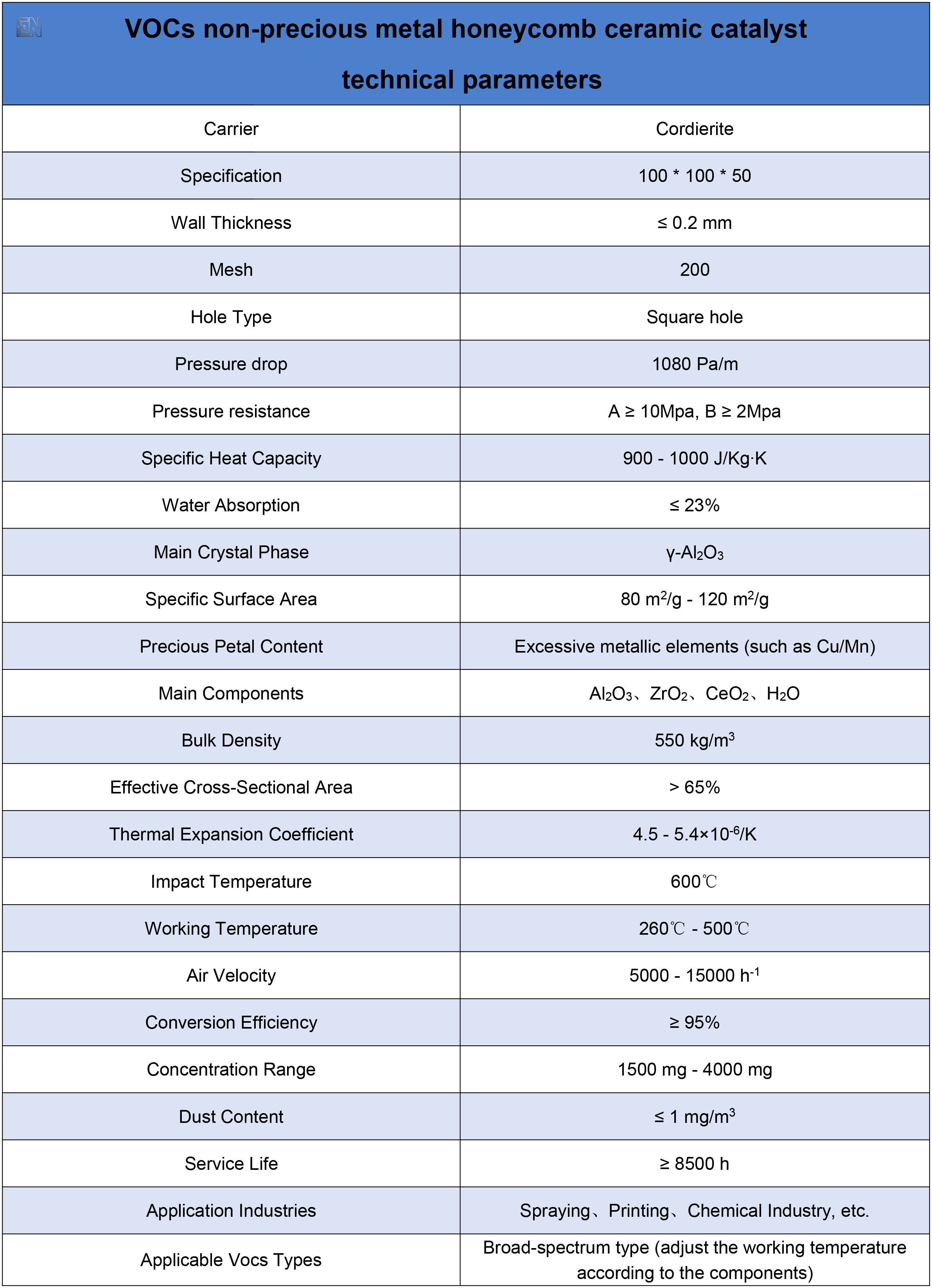
High Catalytic Activity: Nano-scale active components (prepared via special technology) ensure large adsorption capacity and 95-99% VOCs conversion efficiency, even for complex pollutants like alcohols, ethers, and esters.
Low Operating Costs: Non-precious metal composition reduces material costs by 30-50% compared to precious metal catalysts. It operates at 260-500℃, lowering energy consumption for heating systems.
Long Service Life: Resists deactivation from common poisons (resins, tars, heavy metals) and maintains performance for ≥8500 hours, reducing replacement frequency and downtime.
One-Stop Technical Support: Offers full-cycle services, including pre-sales selection, personalized design, on-site installation, and after-sales testing/recycling.
Market Research
The global VOCs catalyst market is expected to reach $4.2 billion by 2028, driven by strict emission norms (e.g., EU REACH, U.S. EPA) and industrialization in emerging economies. Key market trends include:
Growing demand for non-precious metal catalysts in large-scale industrial applications, as enterprises seek cost-effective alternatives to platinum/palladium-based products.
Rising need for broad-spectrum catalysts that handle mixed VOCs (common in spraying, printing, and chemical industries).
Increased investment in waste gas treatment projects, especially in Asia-Pacific and North America, where environmental awareness is high.
Performance Meets
Achieves ≥95% VOCs conversion efficiency (up to 99% for low-to-medium concentration pollutants) within 1500-4000mg/m³ concentration range.
Complies with EU environmental standards and meets industrial air velocity requirements (5000-15000h⁻¹).
Resists S/Cl poisoning via rare earth (La, Ce) doping, adapting to complex waste gas compositions.
Maintains stability under impact temperatures up to 600℃, ensuring safe operation in fluctuating industrial environments.
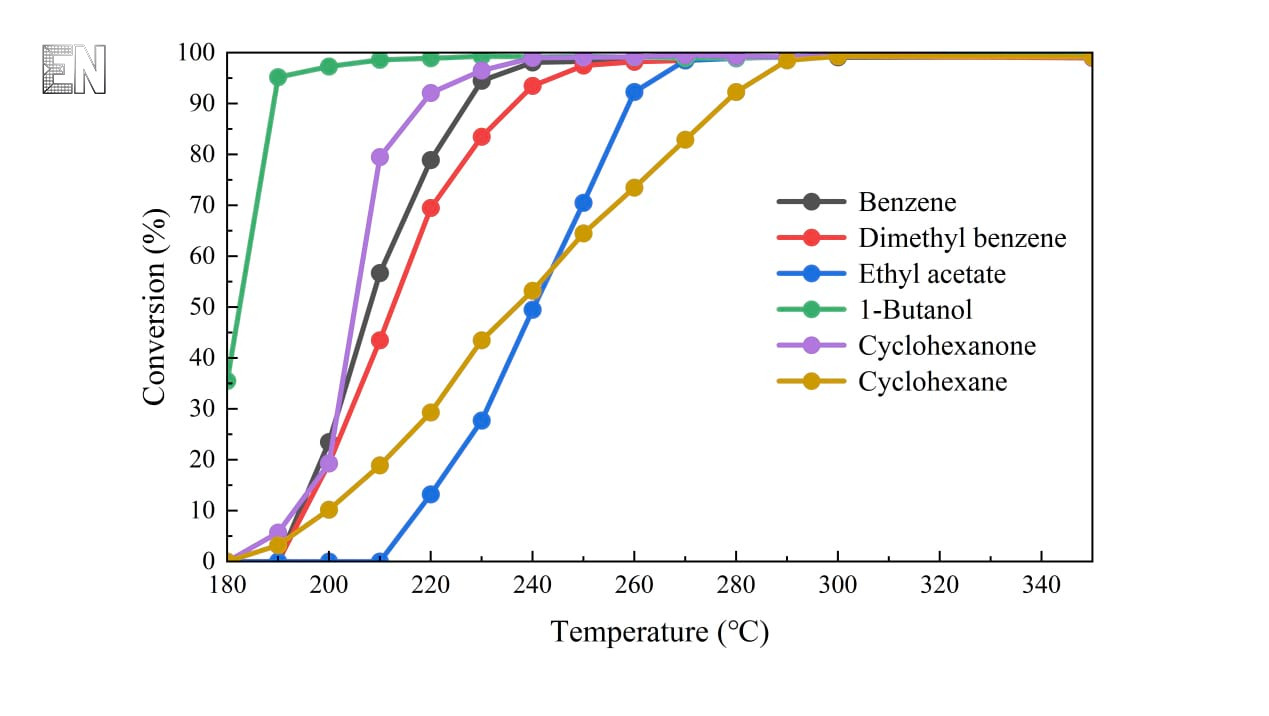
VOCs conversion rate-temperature
change trend chart