


Views: 0 Author: Site Editor Publish Time: 2026-10-14 Origin: Site


Flexible packaging and commercial printing facilities face a unique operational reality. They rely heavily on solvent-intensive processes generating massive volumes of exhaust. These high-volume, low-concentration (HVLC) emissions pose a significant environmental challenge for plant engineers. Typical emissions include toluene, ethyl acetate, and mixed alcohols.
Traditional compliance methods struggle in these environments. Treating HVLC airstreams using a standalone thermal oxidizer demands huge equipment footprints. Facilities burn through massive amounts of natural gas simply to maintain combustion temperatures. This outdated approach wastes energy, inflates overhead, and limits plant scalability.
Plant engineers need smarter, highly efficient solutions. We will explore an objective, evidence-based framework for evaluating a VOC Concentrator for Printing and Packaging Exhaust. You will learn core design criteria, optimal technology pairings, and critical implementation realities. This knowledge empowers you to streamline your regulatory compliance strategy while drastically reducing energy dependency.
A properly specified VOC concentrator reduces exhaust volume by 10x to 20x, drastically shrinking the required size and CAPEX of the downstream thermal oxidizer.
Zeolite rotor concentrators are the industry standard for printing applications due to their non-flammable properties and resilience against fluctuating solvent loads.
Pairing a concentrator with a Regenerative Thermal Oxidizer (RTO) offers the highest thermal efficiency for large-scale operations.
System design must account for site-specific variables, including exhaust humidity, particulate matter (inks/dust), and regulatory compliance (e.g., EPA/MACT standards).
Continuous web printing and laminating lines need massive airflow for drying. This high CFM (Cubic Feet per Minute) requirement dilutes volatile organic compounds rapidly. Consequently, concentrations drop well below the Lower Explosive Limit (LEL). Treating this massive, dilute airstream directly is highly inefficient. Pushing thousands of cubic feet of mostly clean air through a massive combustion chamber wastes tremendous amounts of thermal energy.
Hydrophobic zeolite rotors solve this specific airflow problem. These rotating honeycomb wheels adsorb VOCs from the cool, high-volume process exhaust. The hydrophobic nature ensures the media rejects water vapor while capturing solvents. As the rotor turns into a designated heated section, it desorbs the trapped VOCs. A small, heated sweep stream carries the concentrated solvents away.
Let us examine the mathematical impact of this volume reduction. A concentrator can shrink a 50,000 SCFM exhaust stream at 150 ppm down to just 5,000 SCFM at 1,500 ppm. You completely remove the need for oversized destruction equipment. This dramatic volume shift optimizes your entire printing and packaging VOC treatment system. You process less air, burn less fuel, and achieve superior destruction efficiency.
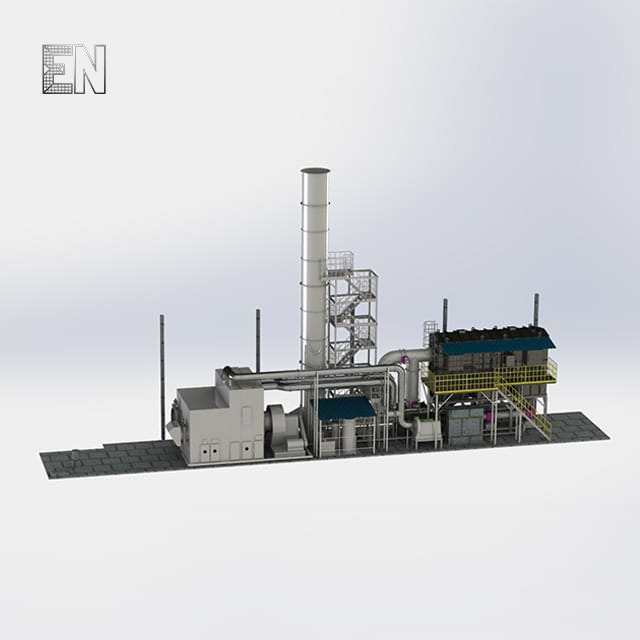
Engineering a robust VOC Concentrator requires careful component selection. Rotor media selection dictates long-term safety and performance. We strictly recommend zeolite over activated carbon for printing applications. Hydrophobic zeolite repels moisture naturally. It handles water-based inks without degrading. More importantly, zeolite eliminates the severe fire risks commonly associated with carbon beds. Hot spots in carbon systems lead to dangerous bed fires.
Your concentration ratio, or desorption ratio, is another critical design variable. This metric usually sits between 10:1 and 20:1. Engineers determine the exact ratio based on your specific inlet concentration. The ultimate goal is pushing the downstream oxidizer past its auto-thermal threshold. You achieve self-sustaining combustion when sized correctly. The solvents themselves become the fuel.
Particulate matter frequently ruins poorly designed rotors. Printing floors generate heavy paper dust. Aerosolized inks escape web enclosures constantly. You must deploy multi-stage pre-filtration to prevent rotor blinding. A blinded rotor loses adsorption capacity rapidly, leading to compliance failures.
Follow these pre-filtration steps for optimal rotor protection:
Install G4 pre-filters to catch large paper fibers and coarse debris.
Use F7 bag filters to capture medium particulate matter from ink mists.
Add F9 rigid secondary filters to protect the zeolite matrix from micro-aerosols.
Monitor differential pressure across all filter banks continuously.
Cooling and desorption temperature control also demand precise engineering. You must balance the cooling zone air perfectly. This process recovers heat for the desorption cycle. It also cools the rotor substrate back to optimal adsorption temperatures. Precise control optimizes the desorption sector without thermally degrading the delicate zeolite structure.
A VOC Concentrator with RTO shines in continuous, multi-press operations. These facilities often experience highly variable solvent loads. Presses ramp up, change jobs, or enter standby modes. The RTO easily handles these dynamic fluctuations. The heavy ceramic heat exchange beds provide immense thermal stability.
The efficiency of this combination is unmatched. The concentrated airstream provides high fuel value directly to the combustion chamber. The RTO operates auto-thermally under most production scenarios. You require zero supplemental natural gas during normal continuous operations. The ceramic media recovers up to 95% of the thermal energy generated.
Some plants prefer lower operating temperatures. Catalytic systems work well for specific, predictable solvent mixtures. The presence of precious metal catalysts allows oxidation at roughly half the temperature of an RTO. This lowers the metallurgical requirements for the equipment.
However, catalytic oxidation introduces severe risk factors. Certain packaging adhesives contain specific additives. Silicone coatings release compounds that poison catalysts permanently. Catalyst masking leads to expensive, unplanned media replacements. You must analyze your chemical inventory carefully before selecting a catalytic unit.
Feature | Concentrator + RTO | Concentrator + Catalytic Oxidizer |
|---|---|---|
Ideal Application | Variable loads, multi-press facilities | Predictable loads, single solvent types |
Operating Temperature | 1,500°F - 1,600°F | 500°F - 700°F |
Poisoning Risk | None | High (Silicone, heavy metals) |
Thermal Efficiency | Up to 95% (Ceramic Media) | 65% - 70% (Standard Heat Exchanger) |
Modern regulatory frameworks demand absolute reliability. Engineering teams design systems to guarantee 98% to 99% Destruction and Removal Efficiency (DRE). You need this stringent performance to meet Title V permits. MACT (Maximum Achievable Control Technology) standards leave no room for error. We engineer the concentrator and oxidizer integration to ensure continuous compliance reporting.
Safety protocols demand continuous Lower Explosive Limit (LEL) monitoring. These sensitive sensors track the highly concentrated desorbed airstream. They prevent the concentration from ever exceeding 25% LEL. The control panel modulates desorption airflow automatically. If a spike occurs, the system safely dilutes the airstream before it reaches the combustion chamber.
Flexible packaging solvent profiles pose unique fire risks. High-speed printing requires volatile, fast-drying inks. You must integrate robust fire suppression systems. Automatic bypass dampers divert airflow instantly during thermal emergencies. Water washdown capabilities clear sticky aerosol buildups from the ductwork. High-temperature alarms provide immediate response mechanisms, shutting down process lines safely.
Plant floor space represents premium real estate. Expanding production lines always takes priority over utility equipment. A concentrator system radically reduces the physical plant footprint required for emissions control. Traditional standalone high-volume oxidizers span massive areas. They often require heavy structural steel platforms. Shrinking the oxidizer volume by 90% frees up valuable real estate for new printing presses.
Tying new ductwork into existing printing presses requires engineering finesse. You cannot disrupt the delicate pressure balances inside the press dryers. Altering exhaust pressures ruins product quality and slows curing times. Variable Frequency Drives (VFDs) manage induced draft fans perfectly. You maintain exact dryer performance while capturing all fugitive emissions.
You must short-list vendors wisely during the procurement phase. Look for manufacturers offering pilot testing capabilities. Ask specific questions about proprietary zeolite formulations. Demand strict performance guarantees regarding pressure drop and DRE. Reliable vendors provide complete transparency during the front-end engineering phase. They conduct rigorous solvent profiling before proposing a final design layout.
Rigorous front-end engineering dictates overall system success.
Accurate solvent profiling ensures the correct rotor specification.
Precise pre-filtration guarantees long-term operational performance.
Optimal technology pairing maximizes destruction efficiency.
Do not rush the design phase. We advise EHS and plant managers to begin with a comprehensive airflow audit. Map your exact solvent loads across every production shift. Once you understand your baseline metrics, you can confidently issue an RFP. Request a technical consultation or site audit from our engineering team today to build a compliant, highly efficient facility.
A: Yes, provided the system uses hydrophobic zeolite and the relative humidity of the exhaust stream is managed (typically kept below 70-80% to ensure optimal VOC adsorption).
A: With proper pre-filtration to prevent particulate masking and routine maintenance, industrial zeolite rotors typically last 7 to 10 years before requiring block replacement.
A: Modern VOC concentrators utilize Variable Frequency Drives (VFDs) and pressure control loops to automatically modulate airflow, maintaining capture efficiency during fluctuating press operations.


