


Views: 0 Author: Site Editor Publish Time: 2026-09-21 Origin: Site


Confusing fence-line safety metrics with point-source compliance creates massive risks for industrial facilities. Plant operators face steep regulatory fines and compromised worker safety when they use the wrong data. Misallocated budgets often follow when teams invest in inappropriate monitoring technologies. Plant managers and EHS directors require more than just raw data. You need verifiable, audit-proof metrics. These metrics demonstrate regulatory compliance and prove operational efficiency. A simple sensor reading cannot always satisfy a rigorous environmental audit.
Understanding the physical and legal differences between measurement zones is critical. Operating blindly often leads to citations under the Clean Air Act. This article provides an evidence-based framework for facility leaders. You will learn exactly when to measure ambient environments and when to test stack exhausts. We will also guide you on specifying the right industrial monitoring equipment without overspending.
Ambient VOC concentrations track fugitive emissions and workspace safety, but cannot prove the destruction efficiency of your abatement equipment.
Stack emissions testing provides regulatory proof of point-source pollution control, essential for validating waste gas treatment systems.
Investing in the wrong measurement grade (e.g., using low-cost ambient sensors for compliance reporting) guarantees audit failures and data invalidation.
Continuous compliance often requires a hybrid approach: continuous parameter monitoring at the stack and strategic ambient monitoring at the fence-line.
Defining the scope is your first critical step. Ambient monitoring involves measuring unconfined air quality. We typically measure this at the fence-line, in open workspaces, or across surrounding neighborhoods. Gas levels here range from parts per billion (ppb) to low parts per million (ppm). The physics of unconfined gas means you are measuring highly diluted air mixed heavily with background atmospheric gases.
Stack monitoring serves a completely different purpose. It measures highly concentrated, confined exhaust gases directly from a chimney or duct. These environments often show high ppm to percentage levels. The gas flow is directional, pressured, and tightly contained. You are measuring the direct output of a manufacturing process before it enters the atmosphere.
The regulatory lens clearly separates these two practices. OSHA and NIOSH mandate workspace exposure limits using ambient data. They focus strictly on human health during an eight-hour work shift. Regulators establish Permissible Exposure Limits (PELs) to protect your technicians. Conversely, the EPA enforces Clean Air Act Title V compliance using stack data. They care about total environmental pollution loads entering the public domain.
Data application differs drastically between methods. Ambient data indicates leaks and exposure risks. It tells you if a valve failed or if a pump seal ruptured. Stack data proves process control. It demonstrates abatement efficiency directly at the source. You cannot use ambient data to prove stack compliance, nor can you use stack data to prove workspace safety.
Table 1: Technical Scope Comparison
Feature | Ambient Monitoring | Stack Emissions Monitoring |
|---|---|---|
Target Environment | Unconfined (fence-line, workspaces) | Confined (ducts, chimneys, exhausts) |
Concentration Levels | ppb to low ppm | High ppm to percentage (%) |
Regulatory Focus | OSHA / NIOSH (Worker Safety) | EPA / Local EPA (Title V Compliance) |
Primary Goal | Leak detection and health exposure tracking | Pollution control and abatement validation |
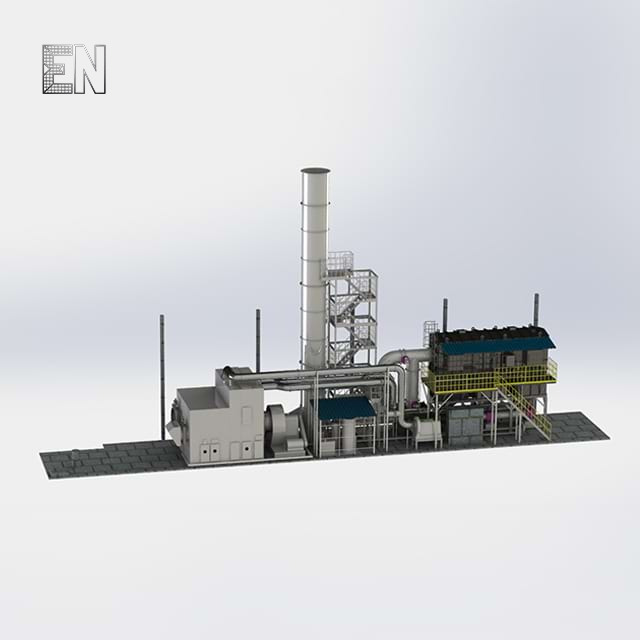
Addressing fugitive emissions requires a dedicated approach. You often deal with leaking valves, flanges, open vats, or aging storage tanks. Source-point capture is physically impossible in these scattered locations. Plumes of gas drift unpredictably based on wind and facility ventilation. You must prioritize measuring Ambient VOC Concentrations to manage these unconfined areas effectively.
Evaluation criteria for ambient solutions demand careful review. First, assess detection limits. You often need sub-ppm sensitivity to catch minor leaks early. Photoionization Detectors (PID) generally offer excellent sensitivity for these low ranges. Second, consider environmental resilience. Hardware must endure harsh weather, high humidity, and rapid temperature shifts. Look for equipment featuring NEMA 4X or IP66-rated enclosures to ensure survival in outdoor settings.
Implementation reality brings specific challenges. Ambient sensors suffer from cross-sensitivity and baseline drift. A sensor might trigger an alarm due to a harmless cleaning solvent rather than a hazardous chemical leak. Methane often interferes with non-methane organic readings. They signal exactly where a problem exists. However, they rarely quantify total facility output accurately.
You must calibrate these sensors frequently to maintain reliable baseline readings. Over time, UV lamps in PID sensors degrade, and sensor membranes clog with airborne dust. Understanding these limitations prevents false security. Ambient monitoring acts as your early warning system, not your final accounting ledger.
Best Practice: Always map out potential leak nodes using Optical Gas Imaging (OGI) cameras before installing fixed ambient sensors. This ensures your fixed detectors sit precisely in the path of historical emission plumes.
Common Mistake: Relying on fence-line sensors to estimate total facility emissions leads to massive calculation errors and swift regulatory penalties.
Proving compliance to regulators is a high-stakes business problem. You must demonstrate your abatement equipment meets mandated destruction and removal efficiency (DRE) standards. Common systems include Regenerative Thermal Oxidizers (RTOs), chemical scrubbers, or carbon adsorbers. Regulators do not assume these systems work. You must prove it continuously.
Measuring raw stack emissions is the only reliable way to validate operations. Thermal or catalytic VOC oxidation requires precise temperature and adequate dwell time to destroy pollutants. Stack testing confirms these parameters work correctly in real-time. This empirical data acts as direct proof for your waste gas treatment investments.
Measurement methodologies demand analytical-grade equipment. Flame Ionization Detectors (FID) or advanced PID systems act as industry standards for stack measurements. You must ensure your equipment complies fully with EPA Method 25A. This method defines exactly how to measure total gaseous organic concentration. It requires specific calibration gases, typically propane, to establish a verifiable baseline.
Implementation reality reveals incredibly harsh environments. Stack exhausts contain high heat, corrosive moisture, and heavy particulate loads. Standard ambient sensors would melt or clog within minutes here. Hardware requires robust sample conditioning systems. You need chillers to remove moisture and micron filters to block ash.
If you ignore sample conditioning, probe clogging and false negatives will occur rapidly. Untreated moisture condenses inside the sample lines, absorbing water-soluble VOCs before they ever reach the analyzer. This creates artificially low readings that violate compliance auditing rules.
Best Practice: Use heated sample lines maintained above 120°C to prevent moisture condensation before the exhaust gas reaches your analytical cabinet.
Common Mistake: Failing to perform daily automated calibration checks on stack CEMS often invalidates months of emissions data during an EPA audit.
You must map features directly to your operational outcomes. Every facility requires a tailored approach based on specific legal permits and site layouts. Let's break down the feature-to-outcome mapping clearly.
Goal: Worker Safety & Leak Detection. Your approach should utilize strategically placed ambient fixed gas detectors alongside handheld PID sniffers. This hybrid allows continuous area monitoring while empowering technicians to pinpoint exact flange leaks.
Goal: Title V Compliance & Abatement Proof. Your approach demands Continuous Emissions Monitoring Systems (CEMS) or periodic stack testing by accredited third parties. You must extract gas directly from the stack using EPA-approved methodologies.
Scalability and integration matter immensely for long-term success. Can your chosen instruments integrate smoothly into existing SCADA or DCS architectures? Avoid proprietary vendor lock-in whenever possible. Seek out hardware that communicates via open protocols like Modbus TCP/IP, OPC-UA, or standard 4-20mA analog signals. This flexibility allows your engineering team to pull data into centralized dashboards without paying recurring vendor software fees.
Cost-to-Value analysis requires a balanced perspective. Ambient networks offer a lower upfront capital cost. They deploy quickly and scale easily across large tank farms. Stack CEMS require much higher capital expenditure. They need specialized shelters, power drops, and integration engineering. However, stack CEMS represent an absolute regulatory necessity. Failing to invest properly in CEMS usually results in catastrophic compliance penalties. You cannot substitute a cheap ambient network for a required stack monitor.
Avoiding the cheap sensor trap is crucial for long-term operational success. Consumer-grade or low-tier industrial sensors cannot survive high-liability environments. Using these inferior devices to measure VOC concentration brings severe consequences. You will face frequent recalibration demands, constant false alarms, and eventual audit rejection.
Maintenance burdens require transparent operational planning. Stack CEMS demand rigorous upkeep to remain legally valid. You need a steady supply of certified zero and span calibration gases. Heated sample lines require frequent electrical continuity checks. Technicians must perform weekly maintenance routines to clean filters and verify flow rates. Ambient networks also need regular bump testing. A bump test quickly exposes the sensor to a known gas concentration to verify responsiveness. Skipping these physical maintenance steps guarantees data failure.
Data security and compliance reporting cannot be an afterthought. Your software architecture must prevent unauthorized data manipulation. Regulators actively look for edited spreadsheets or overridden alarm logs. Your system should generate automated, tamper-proof reports natively. These reports must align perfectly with local environmental agency standards. Implementing read-only database structures for compliance logs protects your facility from accusations of data tampering.
Best Practice: Establish a dedicated contract with a calibration gas supplier to ensure you never run out of EPA-protocol span gas for your daily CEMS zero/span checks.
Building a robust strategy takes methodical planning. Rushing into a hardware purchase usually results in incompatible equipment and wasted capital. We recommend following these structured steps to guarantee success.
Conduct a comprehensive site emissions inventory. Walk your entire facility. Identify your point sources clearly. These include stacks, vents, and thermal oxidizer exhausts. Separate them from area sources like tank farms, loading bays, and open-air solvent baths. This inventory dictates exactly where you need ambient versus stack solutions.
Apply strict shortlisting logic. Evaluate monitoring hardware vendors based heavily on ISO certifications and proven uptime metrics. Demand demonstrated industry-specific expertise from third-party testing laboratories. A vendor who specializes in municipal water treatment might not understand the harsh realities of a petrochemical stack.
Secure actionable baseline data. Request a pilot study or a baseline environmental assessment from a certified laboratory. Let them map your actual concentrations using portable analyzers. Do this before committing to any multi-point continuous monitoring capital project. Real data prevents you from over-specifying or under-specifying your final equipment.
Your facility deserves a customized blueprint. Do not copy a monitoring layout from a different plant. Variables like wind direction, duct velocity, and chemical mixtures change entirely from site to site. Engage with environmental engineers who understand both the instrumentation and the legal framework.
You must distinguish clearly between safety metrics and compliance metrics. Measuring ambient environments protects your people and your surrounding community from fugitive leaks. Meanwhile, rigorous stack emissions monitoring protects your operating license. It proves your environmental investments are actively working and satisfying EPA mandates.
We recommend you prioritize verifiable, standard-compliant technologies at all times. Ignore aggressive marketing claims pushing low-cost sensors for rigorous compliance tasks. Ensure your technical team understands the fundamental differences in equipment grades. Finally, build a hybrid monitoring network designed specifically for your facility footprint. Protect your workers with ambient coverage, and protect your business with analytical stack testing.
A: No. Ambient sensors measure localized concentration (ppm/ppb), not mass flow rate. Regulatory reporting requires stack testing data to calculate total mass emissions.
A: EPA Method 25A (using FID) is the industry standard for measuring total gaseous organic concentration in stacks.
A: Most regulatory frameworks require daily automated calibration checks and quarterly relative accuracy test audits (RATA) to ensure data validity.
A: No. Regulators often require continuous monitoring precisely to prove that the oxidation equipment has not failed or degraded over time.


