


Views: 0 Author: Site Editor Publish Time: 2026-10-08 Origin: Site


Plant managers operating spray booths face a difficult core operational conflict. They must achieve strict emission compliance while managing massive energy costs. These financial burdens stem directly from handling high-volume, low-concentration exhaust air constantly pulled through the facility.
Treating 100,000+ CFM of paint line exhaust directly through thermal oxidation is financially unviable. It demands excessive amounts of natural gas just to heat ambient air to combustion temperatures. Therefore, concentration becomes a mandatory first step before oxidation takes place.
This article serves as a detailed technical evaluation guide for your facility. We will explore how to select and integrate a VOC Concentrator for Coating and Painting Lines effectively. You will learn to navigate the three most critical operational variables. These include managing exhaust volume, identifying solvent composition, and executing proper backend oxidation matching.
Volume Reduction: A properly sized zeolite VOC concentrator reduces exhaust volume by a ratio of 10:1 to 20:1, drastically lowering the CAPEX and OPEX of the subsequent oxidizer.
Solvent Compatibility: Industrial coatings contain complex solvent mixtures; high-boiling-point solvents require specific high-temperature desorption capabilities to prevent rotor fouling.
Pre-treatment is Non-Negotiable: Paint overspray and particulates are fatal to zeolite rotors; robust multi-stage filtration is the primary driver of system longevity.
Backend Matching: Choosing between a VOC Concentrator with CO (Catalytic Oxidizer) and an RTO (Regenerative Thermal Oxidizer) depends strictly on energy recovery needs, facility footprint, and solvent poisoning risks.
Paint booth ventilation systems follow strict safety physics. High airflow ensures safe breathing environments for workers. It also removes overspray rapidly. This rapid removal prevents surface finish defects on your products. However, pulling massive amounts of ambient air dilutes the solvent emissions heavily. Consequently, solvent concentrations remain far below the Lower Explosive Limit (LEL). Auto-thermal oxidation requires much higher solvent densities. You cannot sustain an oxidation flame efficiently without them.
Heating high-volume ambient air wastes enormous amounts of fuel. Direct thermal oxidation requires raising 100,000+ CFM of air to 1,500°F. The natural gas costs associated here are staggering. Alternatively, pre-concentrating the exhaust captures the solvents first. The system then releases them into a much smaller, targeted airstream. You send only this small, dense volume to the oxidizer. Proper industrial coatings VOC treatment demands this two-step approach. It slashes fuel consumption drastically.
A successful implementation meets several strict criteria. First, you must achieve a Destruction and Removal Efficiency (DRE) exceeding 95%. Second, your normalized natural gas consumption should drop significantly compared to direct oxidation. Third, the system must satisfy local environmental agency limits flawlessly. Finally, the emission control equipment must never create production bottlenecks on your coating line.
Evaluating the ideal concentration ratio dictates your entire system design. Typical ratios range between 10:1 and 20:1. A 10:1 ratio reduces a 100,000 CFM exhaust stream down to 10,000 CFM. Pushing for maximum concentration sounds appealing for downsizing equipment. However, extreme concentration is not always optimal. Over-concentrating the solvents can breach safety LEL thresholds in the desorption stream. Most fire safety codes restrict desorption streams to 25% of the LEL. You must balance maximum volume reduction against strict combustion safety margins.
Coating lines rarely operate at a constant, steady state. Production speeds vary daily. Shift changes bring idle periods. Color changes require brief system pauses. Therefore, your emission control system needs strong turn-down capabilities. Variable Frequency Drives (VFDs) control the main induced draft (ID) fans. They adjust airflow dynamically based on real-time booth pressure. This flexibility ensures the concentrator wheel maintains optimal face velocity. It prevents efficiency drops during low-production periods.
Plant engineers must choose between standard modular cassettes and custom-built large wheels. We evaluate them based on deployment speed and maintenance access.
Standard Modular Rotor Cassettes: These offer faster deployment times. They ship pre-assembled in standard shipping containers. Maintenance teams can replace individual zeolite blocks easily. They suit medium-capacity coating lines perfectly.
Custom Large-Diameter Wheels: These support continuous, heavy-duty industrial operations. They handle enormous single-source exhaust volumes seamlessly. However, they require longer lead times. Their installation often demands specialized cranes and site modification.
Printing or semiconductor manufacturing processes usually emit predictable, single-chemical solvents. Painting lines differ completely. They use a highly volatile mix of chemicals. Coating formulations blend polar solvents, non-polar solvents, and complex resins. You will frequently encounter alcohols, acetates, and heavy aromatics simultaneously. The zeolite rotor must adsorb this diverse chemical soup efficiently.
High-boiling-point solvents pose the greatest threat to concentrator wheels. Heavy aromatics and glycol ethers require immense heat to vaporize. Standard desorption temperatures often fail to dislodge them. These stubborn solvents remain trapped deep inside the zeolite pores. Over time, they undergo polymerization. They harden and permanently blind the adsorption sites. We call this phenomenon rotor poisoning. Poisoned rotors lose efficiency rapidly and require expensive premature replacement.
You must evaluate vendor equipment for specific preventative features. Implement these strategies to extend rotor lifespan:
High-Temperature Desorption Cycles: Ensure the system supports periodic bake-out cycles. It must elevate the desorption temperature temporarily to burn off heavy residues.
Hydrophobic Zeolite Formulations: Specify specialized hydrophobic zeolite blocks. They reject ambient humidity effectively. Water vapor will not compete with solvents for adsorption space.
In-Situ Washing Capabilities: Select rotor housings equipped with integrated washing nozzles. They allow maintenance teams to flush the zeolite blocks safely during annual shutdowns.
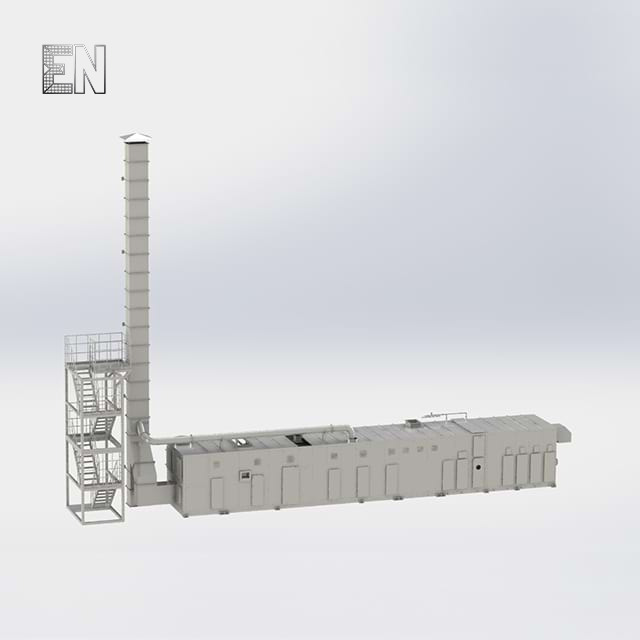
High-capacity industrial coating lines generate heavy, complex solvent loads. Operations prioritizing maximum thermal efficiency require robust backend destruction. A VOC Concentrator with RTO fits these scenarios perfectly.
The RTO uses ceramic media beds to capture and reuse heat. It offers exceptional heat recovery rates, often reaching up to 95%. This system handles a wide variety of difficult solvents easily. It operates at very high temperatures, destroying chemicals without suffering from poisoning. However, this pairing requires a significantly larger physical footprint. It also commands a higher upfront capital expenditure (CAPEX).
Some facilities face severe physical footprint constraints. Others process lower overall solvent masses with highly predictable chemical profiles. In these cases, a VOC Concentrator with CO provides an excellent alternative.
The catalytic oxidizer uses precious metal catalysts to ignite solvents. This allows it to operate at much lower temperatures than an RTO. Lower temperatures save considerable energy daily. The equipment design remains highly compact. However, catalytic systems possess a major vulnerability. They are highly susceptible to catalyst poisoning. Specific paint additives, especially silicones and heavy metals, will permanently destroy the catalyst bed. You must audit your paint inventory strictly before choosing this option.
Operational Variable | System Z: Recommend RTO Integration | System Z: Recommend CO Integration |
|---|---|---|
Solvent Profile X | Complex, heavy aromatics, silicone additives present. | Light solvents, highly predictable, zero silicone additives. |
Footprint Y | Ample outdoor space available for large ceramic beds. | Strict indoor limits or rooftop installation required. |
Capital Budget | Higher initial CAPEX available for long-term fuel savings. | Lower initial CAPEX preferred; willing to replace catalysts. |
Paint particulate is incredibly destructive to emission control systems. Wet overspray will instantly blind a zeolite rotor. It coats the honeycomb structure and stops all adsorption immediately. Therefore, robust pre-treatment is absolutely non-negotiable. You must design a strict multi-stage filtration sequence before the concentrator inlet. Start with a G4 coarse filter to catch heavy droplets. Follow it with an F7 medium-efficiency filter. Finally, install an F9 fine filter to capture microscopic dust. You must change these filters religiously to protect the multi-million-dollar rotor behind them.
Integrating a concentrator and an oxidizer adds significant airflow resistance. We measure this resistance as pressure drop. Your main ID fan must overcome the pressure drop of the filters, the rotor, and the ductwork combined. Managing this fan speed is critical. You must maintain a slight negative pressure inside the paint booth at all times. If booth pressure turns positive, toxic fumes will leak into the factory. Conversely, excessive negative pressure creates drafts. Uncontrolled drafts ruin the coating finish quality on your products.
Concentrating flammable gases introduces inherent fire risks. You must implement robust safety automation to protect the facility. Install continuous LEL monitoring sensors inside the desorption ductwork. These sensors track solvent density in real-time. If the concentration spikes dangerously, the safety PLC must react instantly. It should trigger emergency bypass dampers automatically. These dampers divert the exhaust gas straight to the atmosphere safely. Additionally, integrate automated fire suppression systems directly into the rotor housing for ultimate protection.
Successful emission control hinges on meticulous preliminary engineering. You must gather precise operational data long before selecting a vendor. Understand your peak CFM requirements clearly. Map out your peak solvent loads thoroughly. Identify every chemical compound present in your paint inventory. Guesswork during the design phase leads to catastrophic equipment failure.
We recommend taking the following immediate next steps:
Initiate a thorough engineering audit of your current exhaust infrastructure.
Gather exactly one month of detailed paint and thinner usage data.
Calculate your real-time booth exhaust metrics during peak production hours.
Consider running a small-scale pilot testing program to verify zeolite compatibility.
Avoid buying off-the-shelf systems without customizing the filtration sequence.
A: A high-quality zeolite rotor generally lasts between 5 and 10 years in painting applications. However, this lifespan depends heavily on your pre-filtration maintenance. If you allow paint overspray to bypass the filters, the rotor can fail in less than six months. Regular bake-out cycles also extend its life significantly.
A: Yes. Water-based paints still emit volatile organic compounds during the curing process. However, water-based setups generate high exhaust humidity. High moisture levels compete with solvents for space inside standard zeolites. You must require hydrophobic zeolite variants to handle this humidity effectively.
A: Silicone-based additives pose a severe risk to catalytic systems. When burned, silicone transforms into silicon dioxide. This solid ash coats the precious metals instantly, causing permanent catalyst masking. You must strongly prefer an RTO system in this scenario, as it burns off residues without masking issues.
A: The desorption temperature is dictated entirely by the highest-boiling-point solvent present in your coating inventory. Engineers identify the most stubborn chemical you use. They then set the desorption heater to ensure it vaporizes fully. This temperature typically ranges from 180°C to 220°C for industrial paints.


