


Views: 0 Author: Site Editor Publish Time: 2026-10-02 Origin: Site


High-volume, low-concentration exhaust streams require reliable concentration before thermal oxidation. However, even the highest-grade rotors will fail prematurely if upstream exhaust conditions are ignored. Many facility managers push raw air directly into their abatement equipment. They often hope the system handles it without issue.
For facility engineers and environmental compliance officers, maintaining destruction and removal efficiency (DRE) is non-negotiable. Environmental variables in the exhaust stream are the primary culprits behind sudden drops in system performance. You cannot always change what your manufacturing process emits. You can entirely control what reaches your abatement setup.
This article breaks down the exact mechanisms by which moisture and particulate matter degrade performance. We will explore the critical thresholds you must monitor closely. Finally, you will learn how to specify proper pretreatment. This knowledge protects your capital equipment and ensures long-term regulatory compliance.
Competitive Adsorption is Real: While zeolite is largely hydrophobic, relative humidity (RH) above 75-80% causes water vapor to aggressively compete for adsorption sites, sharply lowering VOC capture rates.
Mechanical Degradation: Particulate matter acts as a physical barrier, permanently blinding micro-pores and exponentially increasing system pressure drop.
Pretreatment is Non-Negotiable: Integrating multi-stage filtration and moisture control (cooling/heating) into your VOC pretreatment design is the only verifiable way to guarantee the 5-to-10-year lifespan of a zeolite rotor.
Vendor Accountability: When evaluating a VOC concentrator, demand transparent performance guarantees that explicitly state the required upstream limits for dust and humidity.
The core of any modern abatement system relies on specialized substrate materials. A honeycomb zeolite molecular sieve provides an immense internal surface area. The corrugated structure features countless microscopic channels. Inside these channels, micro-pores actively pull in volatile organic compounds. They use van der Waals forces. These physical forces trap pollutants without creating permanent chemical bonds. This allows the system to release them safely later during the high-temperature desorption phase.
However, industrial emissions rarely contain clean pollutants. Exhaust streams carry diverse contaminants. Automotive paint booths generate sticky resins. Semiconductor fabrication plants exhaust highly humid, solvent-heavy air. Flexographic printing lines introduce fine atmospheric dust into the ductwork.
Operators face two distinct failure modes. Chemical interference occurs when moisture overwhelms the pores. Physical interference happens when solid particulates block the channels. Ignoring either mode leads directly to compliance failures. Your operational expenses will skyrocket. The main rotor degrades, losing its capture capacity entirely. To prevent premature asset death, you must understand how both pollutants attack the substrate.
A common industry misconception assumes modern rotors repel water completely. Engineers often call the material fully hydrophobic. This hydrophobic fallacy creates false confidence. The material certainly handles ambient humidity far better than traditional activated carbon. Yet, it is not impervious to moisture under severe conditions.
You must define the danger zone clearly. When exhaust streams exceed 75% to 80% relative humidity, competitive adsorption begins. The airstream temperature approaches the dew point. Water molecules physically crowd the pore volume. They aggressively compete for available adsorption sites. Because water molecules outnumber the target pollutants, they win the space. The volatile compounds pass through untreated. They escape out the stack. This phenomenon sharply reduces your overall VOC Concentrator Adsorption Efficiency.
Excessive moisture also carries over into the desorption zone. The spinning rotor moves captured compounds into a heated section. Heat breaks the physical bonds to release the concentrated pollutants. If the rotor holds excess water, the system must evaporate it first. Heating water demands massive energy. The latent heat of vaporization is roughly 2260 kJ/kg. Your thermal oxidizer burner fuel consumption will spike dramatically. Furthermore, rapidly boiling water inside the micro-pores causes severe thermal stress. This physically cracks the ceramic substrate over time.
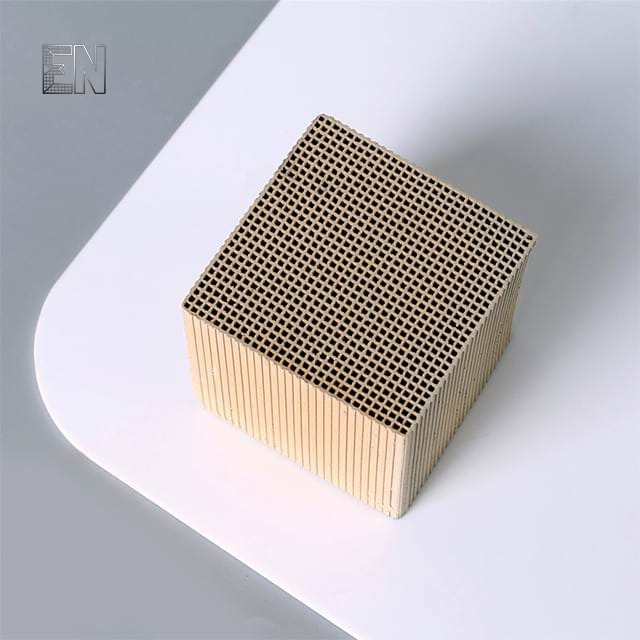
Fine dust acts as a silent destroyer. Sticky aerosols present an even faster threat. Paint overspray, heavy resins, and microscopic debris travel easily through industrial ductwork. These particles physically coat the surface area of the rotor. They permanently blind the micro-pores. Unlike water vapor, dust does not evaporate. It stays locked inside the channels.
This pore blinding creates a compounding effect. As channels clog, the system experiences a massive pressure drop. The main exhaust fan must work much harder to push the same volume of air. Electrical loads increase significantly.
Worse, channeling occurs. Air naturally takes the path of least resistance. It forces heavily polluted exhaust through a much smaller active area of the wheel. This reduces the vital contact time between the air and the substrate. Abatement efficiency drops immediately.
We must also address the worst-case scenario objectively. Combustible dust often traps inside the narrow channels. The rotor eventually rotates into the high-temperature desorption zone. Temperatures here frequently exceed 200°C. Trapped combustible dust can easily ignite under these extreme conditions. This poses a severe fire hazard. A localized fire will melt the internal structures. You risk the total loss of the asset and extended facility downtime.
You must frame VOC pretreatment correctly. It is never an optional accessory. It serves as the critical foundation for sustainable performance. Without proper air conditioning, you essentially gamble your capital equipment.
Effective moisture control requires active strategies. Cooling coils offer excellent primary defense. They drop the exhaust temperature to condense heavy moisture. Liquid water drops safely out of the airstream before it touches the abatement equipment.
Inline heating provides the next step. A small duct heater slightly elevates the exhaust temperature before it reaches the wheel. This lowers the relative humidity safely below the 70% threshold.
Particulate filtration demands a rigorous, multi-stage approach. We recommend following standard industry tiers to maximize protection:
Primary Filtration (G4 Level): Captures large atmospheric debris and heavy particulates. This serves as the first line of defense.
Secondary Filtration (F7/F9 Level): Intercepts finer dust. It catches particles down to the 1-micron range.
Specialty Filters: Includes labyrinth filters or baffle plates. They specifically target wet, sticky paint aerosols.
Implementation brings unavoidable engineering realities. Adding multiple filter banks naturally increases the initial system pressure drop. Engineers must properly size the induced draft fans. You must guarantee they handle this added resistance. Otherwise, the system will choke the main production line. Poor fan sizing leads to inadequate draft, pulling dangerous fumes back onto the factory floor.
Choosing the right equipment requires strict evaluation. A cheaper initial system usually skips robust air conditioning entirely. Saving $50,000 on upfront filtration looks great on an initial budget. However, this decision routinely forces a $150,000 rotor replacement within just two years. Your operational expenses quickly eclipse the initial purchase savings.
When specifying a VOC Concentrator, hold your vendors accountable. Demand transparent performance guarantees.
Essential Vendor Evaluation Questions
Inquiry Topic | Question to Ask | Ideal Vendor Response |
|---|---|---|
Inlet Limits | What are your exact inlet limits for RH and particulate concentration (mg/m³)? | Clear numerical thresholds (e.g., <75% RH, <1 mg/m³). |
Warranty Terms | How does your warranty address performance degradation linked to upstream moisture? | Guarantees based on measured, real-world exhaust matrices, not ideal lab conditions. |
System Scalability | Can the system architecture accommodate additional filtration stages if our production process changes? | Modular skid designs that allow future filter banks to be bolted on easily. |
Compliance security depends entirely on realistic data. Select a partner who bases their guarantees on your actual, measured exhaust matrix. Do not accept models based on theoretical ideal conditions. Your facility will experience humidity spikes during summer months. Production lines will generate sudden dust surges. The vendor must guarantee efficiency across your absolute worst-case scenarios.
System efficiency directly ties to the cleanliness of your incoming air. You cannot expect high performance from contaminated airflow.
Protecting your critical assets requires rigorous temperature, humidity, and dust controls.
Implementing these safeguards ensures continuous regulatory compliance and maximizes your equipment return on investment.
Take immediate action to secure your facility. Schedule a comprehensive exhaust stream audit today.
Consult an application engineer to design a custom pretreatment skid tailored specifically to your emission profile.
A: Typically, systems operate efficiently below 75-80% RH. Above this threshold, efficiency drops sharply due to competitive adsorption. Water vapor floods the micro-pores, physically blocking volatile compounds from attaching to the substrate.
A: With optimal VOC pretreatment, it lasts 5 to 10 years. Without it, severe dust blinding or moisture degradation can ruin a rotor in just 12 to 24 months. Proper upstream filtration dictates the lifespan.
A: Yes. High temperatures (typically above 40°C/104°F) naturally reduce adsorption capacity. The physical bonds weaken in excess heat. This is why upstream cooling is often required alongside active dehumidification strategies.
A: High-pressure air or water washing is sometimes possible for certain rotor types. However, it is risky. It often degrades the zeolite coating and rarely restores the system to 100% baseline efficiency. Prevention via robust filtration remains the industry standard.


