


Views: 0 Author: Site Editor Publish Time: 2025-10-31 Origin: Site


Each year, people gather about 11.2 billion tonnes of solid waste around the world. When this waste breaks down, it lets out organic waste gas. This gas causes almost 5% of all greenhouse gas emissions. You can solve this problem with advanced organic waste gas treatment methods. These methods are thermal oxidation, catalytic oxidation, adsorption, and biological solutions. The best organic waste gas treatment depends on your waste gas type and what your facility needs. New ideas help make organic waste gas treatment better. Companies like Eco Nova Group are leaders with full-process services and high treatment efficiency. Good organic waste gas treatment solutions help you protect the environment and follow strict industry rules.
Know what kind of organic waste gas you have. This helps you pick the best way to treat it at your facility.
Think about using advanced ways like thermal oxidation or biofiltration. These can lower harmful emissions a lot and make things work better.
It is very important to do regular maintenance. Check your system every day. Plan for full service at least once a year to keep it working well.
Try using more than one treatment technology. Using different methods together can remove more gas and save energy.
Talk to experts like Eco Nova Group. They can give you special solutions and help you manage waste gas well.
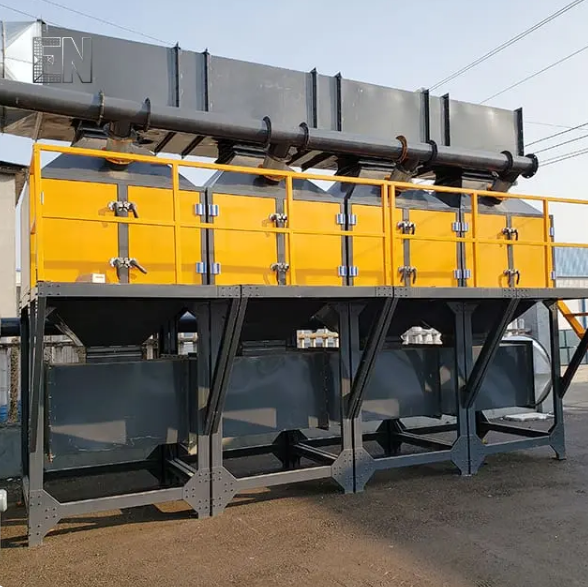
You can pick from many ways to treat organic waste gas. Each way works best for certain waste gas types and needs. Here are the main methods you can use. These help you save energy and avoid extra pollution.
Thermal oxidation uses very high heat to break down bad gases. Systems like Regenerative Thermal Oxidizers (RTOs) and Regenerative Catalytic Oxidizers (RCOs) do this job. They heat waste gas over 1400°F. This destroys volatile organic compounds (VOCs) and hazardous air pollutants. RTOs can remove more than 98% of these gases. Some new models can reach 99% removal. RTOs also use heat recovery to save energy. Their thermal efficiency can be up to 97%.
Tip: RTOs and RCOs work well for high-concentration waste gas. They meet tough industry rules.
Shandong Eco Nova Group offers advanced RTO/RCO systems. Our special technology gives treatment efficiency of at least 99%. Heat recovery rates are at least 95%. You can trust our solutions for top organic waste gas treatment.
System Description | Removal Efficiency |
|---|---|
Twin 3-Chamber RTO and Dust Collector | 99% |
RTO with Zeolite Concentrator | 97% |
VOC Concentrator | 90-99% |
Catalytic oxidation uses a solid catalyst to speed up reactions. It works at lower temperatures, between 500°F and 650°F. You can remove harmful gases and use less fuel. This process changes VOCs into carbon dioxide and water vapor. Main reaction types are Langmuir Hinshelwood, Eley Rideal, and Mars van Krevelen. Catalytic oxidizers cost less and are better for the environment than regular thermal oxidizers.
You can pick different catalyst materials. Noble metals like platinum and palladium work well at low temperatures. Non-noble metal oxides last longer and cost less.
Catalyst Type | Efficiency at Low Temperatures | Durability | Cost |
|---|---|---|---|
Noble Metals (Pt, Pd, Au) | High | Moderate | High |
Non-Noble Metal Oxides | Moderate | High | Low |
Shandong Eco Nova Group makes and sells catalysts. Our products help you get high removal rates and save energy. You can count on our technology for good waste gas treatment.
Adsorption traps VOCs from waste gas using special materials. You can use activated carbon, zeolites, graphene-based materials, or metal-organic frameworks (MOFs). Each adsorbent works best for certain VOCs. Zeolite rotors and VOC concentrators are popular for high efficiency. VOC concentrators can cut energy bills by up to 40%.
Adsorbent Type | Advantages | Target VOCs Characteristics |
|---|---|---|
Activated carbon/biochar | Good for the environment, moderate efficiency | Larger molecules, medium to low polarity, oxygenated VOCs |
Activated carbon fiber | Fast adsorption, easy to clean, high capacity | Small molecules, low to medium polarity, aromatic VOCs |
Graphene-based materials | Very efficient, stable, reusable | Small molecules, polar, aromatic VOCs |
MOFs | High capacity, adjustable structure | Many VOCs with different properties |
Zeolites | Adjustable pore size, selective adsorption | Small molecules, low polarity, stable at high temperatures |
Adsorbents need to be cleaned often. Cleaning includes drying, heating, and steam injection. This helps them work well again.
Shandong Eco Nova Group provides VOC concentrators and zeolite rotor systems. Our solutions help you trap and concentrate VOCs for better removal and energy savings.
Biofiltration uses tiny living things to break down organic waste gases. You can use biofilters made of compost, foam, or other organic stuff. These systems can remove more than 90% of VOCs. Some can reach up to 99%. Biotrickling filters and compost biofilters work for many organic gases.
Note: Biofiltration is a green way to turn waste into energy. You can lower emissions and make useful byproducts for farming and gardening.
You need to keep microbes healthy, control moisture, and set the right time for treatment. Sometimes, you need small test plants to make sure it works well.
Shandong Eco Nova Group designs and installs biofiltration systems. Our engineering services help you add biofiltration to your waste gas treatment for safe and eco-friendly results.
Burner and scrubber systems
ESCAPE and STYRAX systems for special waste gas types
LARCH products for gases with lots of hydrogen
AQUABATE and SALIX scrubbers for cleaning harmful stuff
Electrostatic dust collectors for tiny particles
You can use these methods with waste-to-energy solutions. This helps you recover resources and protect the environment. Shandong Eco Nova Group gives full-process services. We offer custom solutions, testing, and smart operation and maintenance.
If you want to know more about our waste gas treatment technology, contact us for a free consultation. We help you pick the best method for your facility.

Biological solutions are very important for managing organic waste. These methods help turn waste into useful things and cut down on bad gases. Two main systems are biodigesters and anaerobic digesters. They help you handle organic waste and keep the environment safe.
Biodigesters help change organic waste into biogas and digestate. This means less waste goes to landfills and fewer bad gases are made. Using a biodigester gives you renewable energy and stops methane from getting into the air.
Biodigesters turn organic waste into biogas. You can use biogas for heat, power, or fuel.
The process traps methane, which is a strong greenhouse gas, so it does not escape.
You also get digestate, which is good for the soil.
Inside a biodigester, there are three main steps:
Microbes break down the waste into small pieces.
These pieces turn into organic acids.
The acids change into methane, which is the main part of biogas.
Biogas from biodigesters has about 55% to 75% methane. Some new systems can make biogas with more than 95% methane.
You can clean biogas to make it more pure. Cleaning takes out carbon dioxide, hydrogen sulfide, and other gases. This makes biogas good for engines or gas grids. Water scrubbing, cryogenic separation, and chemical absorption help make the methane level higher.
Biodigesters are a good part of your waste plan. They help you get energy, use landfills less, and make products for farms. You can also mix different wastes in co-digestion. This makes more biogas and helps the system work better.
Biodigesters turn waste into biogas and digestate, so there is less landfill waste and fewer emissions.
They make renewable energy, so you use less fossil fuel and lower greenhouse gas emissions.
Catching methane during anaerobic digestion keeps it out of the air and helps stop global warming.
Anaerobic digesters use anaerobic digestion to break down waste without oxygen. This works well for waste with lots of organic material. You can use anaerobic digesters for food waste, manure, and other organic things.
Feature | Anaerobic Systems | Aerobic Systems |
|---|---|---|
Oxygen Requirement | Does not need oxygen | Needs oxygen |
Energy Usage | Uses less energy | Uses more energy |
Treatment Focus | Good for lots of organic waste | Good for less organic waste |
Sludge Production | Makes less sludge | Makes more sludge |
Process Speed | Slower process | Faster process |
Anaerobic digestion has a few steps. First, microbes break down big materials into acids. Then, other microbes turn acids into methane and carbon dioxide. This makes biogas and digestate.
Biogas usually has 55% to 65% methane.
Food waste can make about 500 liters of methane per kilogram.
Dairy manure makes about 240 liters of methane per kilogram.
You can make more biogas by using co-digestion. Mixing farm waste with chemical digestate at a 60:40 ratio gives more methane. Treating feedstock with sodium bicarbonate can boost methane by up to 29.7%.
Catching methane is important because it is a strong greenhouse gas. If it escapes, it can cause climate change.
You can also clean biogas to make it better. Water scrubbing, cryogenic separation, or chemical absorption remove unwanted gases. Some new ways, like microbial electrolysis cells and photosynthetic biofixation, help make more methane and are better for the planet.
Anaerobic digesters help keep nutrients in the system. They give digestate that can be used as organic fertilizer. This means you need less chemical fertilizer and can farm in a better way.
Environmental Benefits of Biodigesters and Anaerobic Digesters:
Benefit | Description |
|---|---|
Reduction of Greenhouse Gases | Biogas helps you use less fossil fuel and lowers carbon emissions. |
Renewable Energy Generation | Biogas can be used for heat, power, and cooling, which helps the planet. |
Soil Health Improvement | Digestate is a good fertilizer, so it makes soil better and you need less chemical fertilizer. |
By using biodigesters and anaerobic digesters, you can:
Make renewable energy from biogas.
Cut down on landfill waste and lower methane emissions.
Make digestate that helps soil health.
When you treat organic waste with anaerobic digestion, you stop methane from getting into the air. This helps fight climate change and saves nutrients for farming.
Tip: Use biodigesters and anaerobic digesters in your waste plan. This helps you get more energy, lower emissions, and support good farming.
When you set up an organic waste system, you must think about a few key things. These things help you pick the best way to manage waste and follow all rules.
You need to know what is inside your waste gas before you choose how to treat it. Different places make different gases from organic waste. For example:
Type of Waste | Main VOCs Present | Other Compounds |
|---|---|---|
Biological Treatment Facilities | Terpenes, Ketones, Alcohols | Sulfur and Nitrogen Compounds |
Landfill | Higher Hydrogen Sulfide | Other Sulfur Compounds |
Sewage Digester | Highest Methane Content | Lower VOCs Content |
Biogas makeup changes with the kind of waste and process.
Sewage digesters make the most methane.
Landfills have more nitrogen and sulfur.
Farm plants have less VOCs.
You might also see hydrogen sulfide, siloxanes, and BTEX compounds. These can be dangerous and need special care.
Flow rate means how much gas goes through your system. You must control flow rate to keep your treatment working well. If you watch flow rate, you help your system clean the gas and keep machines working longer. In digesters, flow rate changes how much methane you get and how well things work.
You must follow rules for emissions in your area. These rules say how much VOCs, methane, and other gases you can let out. For example:
Region | Key Regulations |
|---|---|
Colorado | Reduce methane emissions by 60% below 2005 levels by 2030; semiannual leak detection; no routine flaring |
New Mexico | Capture 98% of waste natural gas by 2026; monthly leak checks |
Federal (EPA) | VOC and methane rules; Greenhouse Gas Reporting Program revisions |
You can use monitors and automatic controls to help you stay within these limits.
You need to think about how much it costs to build and run your system. Bigger systems cost more, but you can save money by selling things like methane or digestate. Machines that use less energy save money over time. Good equipment lasts longer and breaks less often.
Factor | Impact on Cost-Effectiveness |
|---|---|
Energy Efficiency | Lowers long-term operating costs |
Equipment Quality | Reduces maintenance and repair costs |
Initial Investment | Higher upfront, lower long-term cost |
Equipment Lifespan | More savings over time |
Tip: Always test your waste gas and get a solution made just for you. This helps you follow rules and save money.
Picking the right waste gas treatment is very important. You need to think about your space, energy, and future plans. Here is an easy guide to help you choose:
Step | Consideration |
|---|---|
1 | Check your space for equipment and service |
2 | See if you have fuel gases for the system |
3 | Look at water and electricity costs |
4 | Think about new technology for a new plant |
5 | Plan for problems if you want to expand |
6 | Work with experts for a solution that fits you |
You should talk to skilled manufacturers and designers. Eco Nova Group gives one-stop help for organic waste gas treatment. Our team helps with testing, custom equipment, and setup. We support you from start to finish.
Tip: A custom waste gas treatment process helps you follow rules and save money over time.
Taking care of your treatment system is very important. You need to check your system often and use smart tools to watch it. Here are some good tips:
Keep the system at the right temperature.
Use balanced feedstock for smooth running.
Follow the planned time for waste in the system.
Feed the system often to stop sudden changes.
Do daily checks and stick to your maintenance plan.
Using advanced maintenance tools can help make more gas, keep equipment working longer, lower costs, and make things safer. Modern monitoring tools give you live data, so you can fix problems early.
We offer full service, including remote monitoring and emergency help. Our support after you buy makes sure your system works safely and well. With Eco Nova Group, you get trusted waste gas treatment and peace of mind for your organic waste management.
You now know good ways to treat organic waste gas. You can pick thermal oxidation, catalytic oxidation, adsorption, or biofiltration. Look at what your facility needs before you choose. Advanced solutions help you manage waste gas well. Regular checks and help from experts keep your system safe and working right.
Check what kind of waste gas you have and what your facility needs.
Use combined treatment methods to get better results.
Plan for regular checks and fixing.
Keep in mind, getting help from experts helps you follow rules and do well for a long time.
Pick a method that matches your gas type and flow rate. You also need to follow local rules. Thermal oxidation is good for high VOCs. Biofiltration works for low VOCs. Talk to an expert to get a plan that fits your needs.
Look at your system every day. Clean the filters and check the equipment each month. Get a full service at least once a year. Taking care of your system helps it stay safe and work well.
You can use more than one method at the same time. For example, you might use adsorption with thermal oxidation. This helps remove more waste gas and saves energy. Many places use a mix of methods for better results.
Managing organic waste lowers harmful gas emissions. It changes waste into things like biogas and fertilizer. This helps keep the air clean and makes the planet healthier.
You can ask a trusted company like Eco Nova Group for help. They give expert advice and make a plan just for you. They help you from the start to the end. Contact them for a free meeting today.


